 |
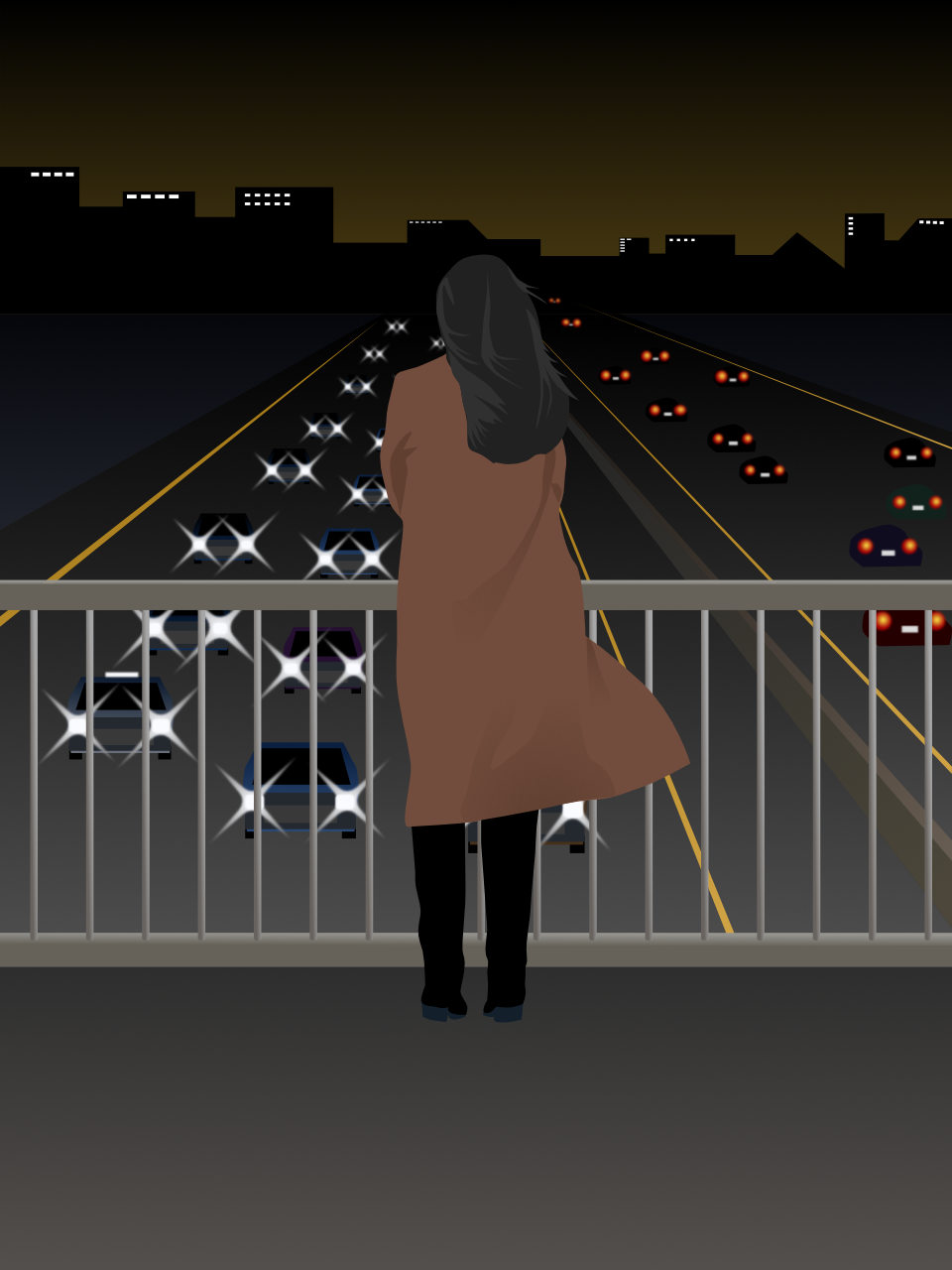
Woman on the Bridge “Don't jump! It's not worth it!” It's a flirtation I've tossed out when I've seen a pretty girl by a bridge railing. Sometimes I'm ignored, sometimes I'm met with a laugh, but this time I was taken seriously. On a January evening in 1983, I was returning home from work, crossing the pedestrian bridge over Macleod Trail to South Centre Mall, when I noticed an attractive woman, about 35, nattily dressed in a long winter coat, staring down at the rush-hour traffic below. She turned to look at me and said, “What did you say?” For a while we held eyes. I waited for a smile or some indication she wasn't serious, but none came. Instead, I saw despair and realized she was thinking of jumping. Without a word, I strode over to her, took her arm and led her off the bridge. She didn't say anything and didn't resist. We got off the bridge and onto the mall parking lot. I asked her what was wrong and her story tumbled out. She had just seen her doctor and learned that she had terminal liver cancer. She described her health problems in detail, and it certainly sounded grim. She didn't look sick, but she was distraught and anxious. To keep her engaged and talking, I walked her around the parking lot. Night had fallen, so it was dark and quiet. I encouraged her to rattle on, hoping it would calm her. It was cold, so when I noticed her coat wasn't done up, we stopped so I could fasten it. She seemed too numb to care and just stood there. I smelled alcohol on her breath and realized she had been drinking. We continued walking around. She told me about her illness and her concerns. I tried making jokes. Sometimes she laughed, but other times she cried. I felt terrible when she cried, and I held her until she composed herself. I led the disconsolate woman around the parking lot while trying to figure out how to help her. She rambled, and I lost track of time. I don't remember much of what she said, but she didn't mention a husband, boyfriend or a friend that I could phone. Eventually it came out that she had two children. It was a lifeline I could use for her. “Look,” I told her, “You have to stick around to take care of your kids. And you have to make sure they are provided for when you're gone.” That turned her around. She stopped talking about dying and started talking about what she could do for her kids. Her despair gave way to a new resolve. It showed in her posture as she straightened up and now looked ahead instead of at the ground. Suddenly she wanted to phone her children, and she strode to the mall. I hurried to catch up to her. We found a pay phone in the mall. When she fished out some coins from her wallet, I noticed it held several large bills. Apparently she was well off. She called and talked briefly. After she hung up, I gave her my number and told her to phone to let me know how she was doing, but by then, she barely acknowledged me. She had taken charge of herself and no longer needed me. She seemed caught up in her thoughts, likely absorbed in plans none of us would ever want to have to make, but I was certain she was now past harming herself. I can't recall my parting words, but whatever I said, she didn't respond. When I last saw her, she was going through her purse and didn't look up or say anything. I felt drained and wanted to go home. I had spent about an hour with the woman I met on the bridge. I never heard from her, and I wondered how she was doing. Maybe I should have taken her number so I could have checked on her. The encounter shook me up, and I never joked about suicide again. |