|
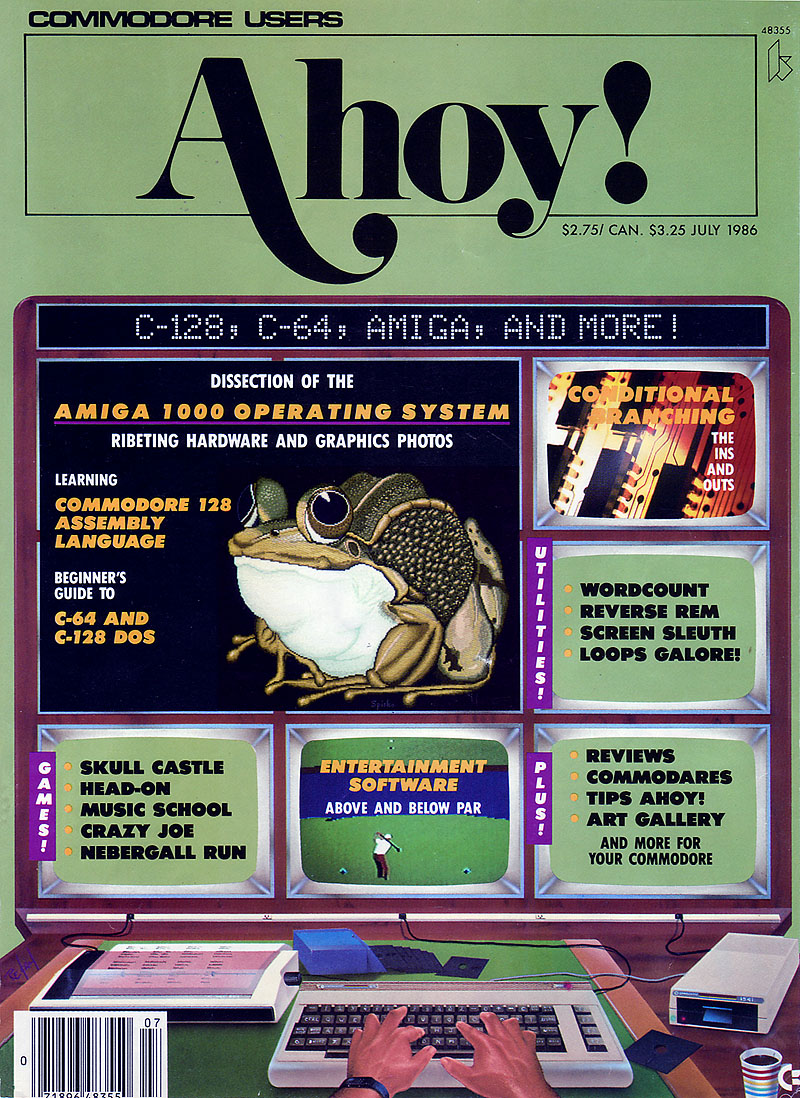
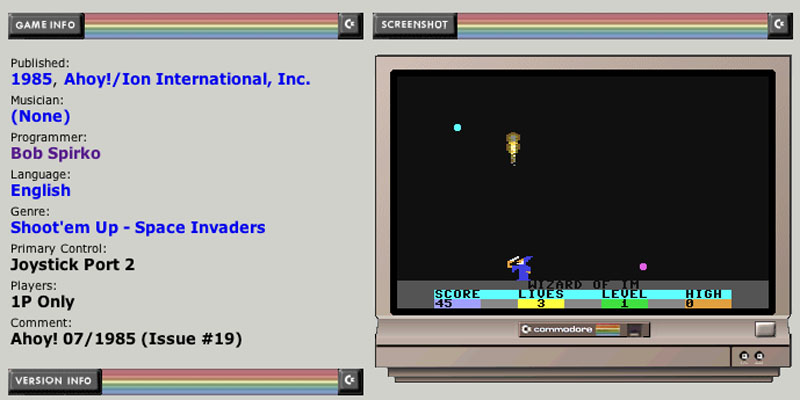
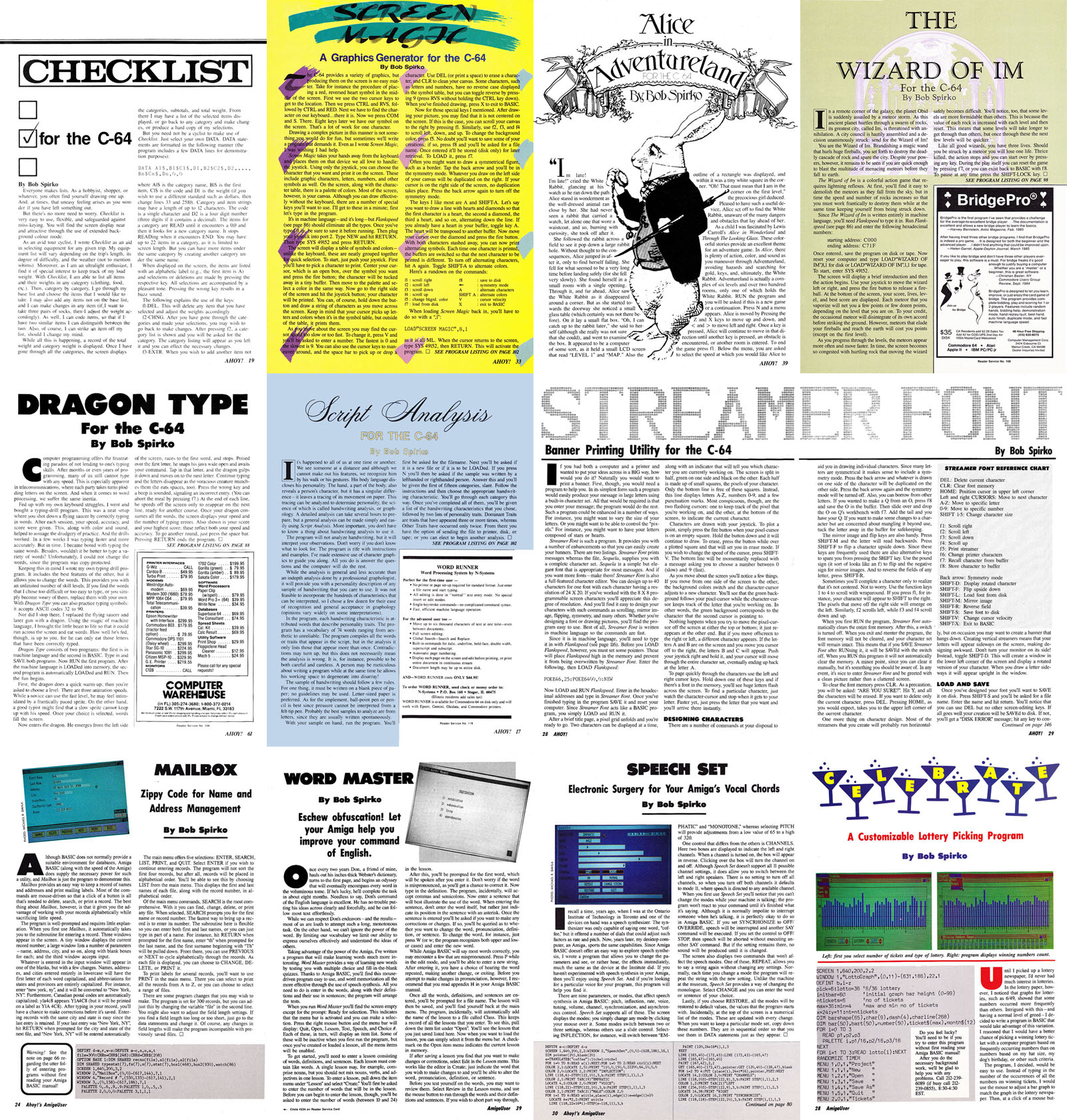
Ahoy! Magazine In 1984, twelve years after I dropped out of my computer science course, I was excited to get back into programming. I purchased a Commodore 64 with 64 kb of memory, a monitor, a tape drive and a manual to learn to program in BASIC. I delved into the manual and, before finishing it, I wrote my first program, Checklist, a utility for creating lists. Checklist was unsophisticated, yet at that time such programs were in demand. I submitted it to Compute! magazine, but they rejected it. Then I sent it to Ahoy!, a computer magazine based in New York. Back then, personal computers were for serious hobbyists since the nascent machines required at least rudimentary programming. Since few commercial programs were available, you usually resorted to writing your own programs or typing them from magazines. For me, the fun, challenge and excitement came from writing my own programs. To my delight, Ahoy! published Checklist and mailed me a cheque. So I got serious. Since tape drives were notoriously slow, I purchased a Commodore 1541 floppy disk drive that used 5-inch, 170 kb disks. Over the next few years, I wrote ten more programs ranging from games to utilities, and Ahoy! published them all. I earned $300 to $500 for each program (about twice that in today’s dollars). Getting published wasn't difficult. There were few programs available but plenty of demanding C64 enthusiasts. According to the Guinness Book of World Records, 30 million Commodore 64s were sold in its lifetime. It’s widely recognised as the single best-selling computer model of all time. Programs were scarce – the Internet hadn't yet made its way into homes – so C64 aficionados turned to computer magazines that published programs that you typed in. My first programs were in BASIC, but later I began programming in Assembler, a low-level language. Assembler was more difficult to code but incredibly fast. Publishing my programs made me conscious of my shortcomings as a writer. With each program, I had to include an instructive article. I felt behooved to learn to write well, so I studied writing, grammar and punctuation. I enjoyed programming, but I also looked forward to writing the accompanying article. I also tried my hand at computer art. Ahoy! published a few of my drawings. I didn't receive any remuneration for any except one, the drawing of a frog which appeared on the front cover of the July 1986 issue. After that issue came out, I had an amusing encounter at Hindson's Computing (now defunct), a computer store in Calgary. I was talking to Eric Hindson, the owner and manager, when a guy approached us. He had a question for Eric. “Do you have a file of Bob Spirko's frog?” he asked. Eric waved a hand at me and said, “Why not ask him yourself?” The young man was so astonished that he jumped back a step. “I thought you were an American!” he exclaimed. I gave him a copy of my frog drawing. In the late '80s, faced with competition from other manufacturers such as IBM and Apple, Commodore's popularity began to decline. Commodore replaced the C64 with a mouse-driven computer, the Amiga (my last two programs were written for it), but it failed to catch on. Interest in Commodore computers waned, as did interest in Ahoy! Magazine. It ceased publication in 1989. Despite the tremendous advances in computers since its heyday, the Commodore 64 still holds a following. Recently, it was re-released with state-of-the-art electronics, but it retained its vintage looks. References to a few of my programs, such as Alice in Adventureland, can still be found on the internet today. |
|
|